
Sustainability Statement
General Information
At argenx, we are on a mission to transform the lives of patients by translating immunology breakthroughs into novel antibody-based medicines, guided by a responsible approach to bringing medicines to patients.
In 2025, we continued to uphold our commitment to transparency and accountability in line with the European Union’s Non-Financial Reporting Directive (NFRD), as implemented into Dutch legislation. We have integrated our Sustainability Statement into this Annual Report in alignment with the general principles of the Corporate Sustainability Reporting Directive (CSRD).
The Dutch government has stated that companies that voluntarily applied the CSRD in 2024 and 2025—including by (i) reporting in accordance with the European Sustainability Reporting Standards (ESRS), (ii) publishing a sustainability report, and (iii) engaging an external auditor to provide assurance on that report—will, in principle, be considered to have complied with their statutory reporting obligations for those years. This reflects the expectation that Dutch legislation will include retrospective application of the CSRD for financial years beginning after 1 January 2024 and 1 January 2025 for entities within scope.
This Sustainability Statement is prepared in accordance with the ESRS and is compliant with the reporting requirements provided for in Article 8 of Regulation (EU) 2020/852. The statement applies the European Commission’s “quick fix” amendment (approved November 2025), which provides transitional relief for companies preparing their second CSRD-aligned disclosures. The EU Taxonomy disclosures are presented within the Environment section of this report and have been prepared in accordance with the reporting rules as applicable until 31 December 2025.
Our Sustainability Statement addresses the interests of key stakeholders, including patients, healthcare communities, employees, investors, and business partners, and is guided by the material topics identified through our double materiality assessment.
We prioritize environmental, social, and governance (ESG) topics that most effectively support our mission and deliver value to stakeholders. Our ESG reporting approach is designed to be transparent, purposeful, and aligned with regulatory requirements, while maintaining our focus on patient outcomes, employee engagement, and the interests of our broader stakeholder community.
This chapter outlines our ESG principles and the methodologies used to measure progress, reflecting our ongoing efforts to generate positive outcomes for patients, employees, and communities.
Content
|
|
Disclosure Requirements |
|
Section |
|---|---|---|---|---|
ESRS 2 |
||||
BP-1 |
|
General basis for preparation of sustainability statement |
|
General Basis of Preparation of the Sustainability Statement (BP-1) |
BP-2 |
|
Disclosures in relation to specific circumstances |
|
Disclosures in Relation to Specific Circumstances (BP-2) |
GOV-1 |
|
The role of administrative, management and supervisory bodies |
|
Management of Material Risks, Impacts and Opportunities by Administrative, Management and Supervisory Bodies (GOV-1, GOV-2) |
GOV-2 |
|
Information provided to and sustainability matters addressed by the undertaking’s administrative, management and supervisory bodies |
|
Management of Material Risks, Impacts and Opportunities by Administrative, Management and Supervisory Bodies (GOV-1, GOV-2) |
GOV-3 |
|
Integration of sustainability-related performance in incentive schemes |
|
Integration of Sustainability-Related Performance in Incentive Schemes (GOV-3) |
GOV-4 |
|
Statement on due diligence |
|
Due Diligence (GOV-4) |
GOV-5 |
|
Risk management and internal controls over sustainability reporting |
|
Risk Management and Internal Controls Over Sustainability Reporting (GOV-5) |
SBM-1 |
|
Strategy, business model and value chain |
|
Sustainability Strategy and Our Business Model (SBM-1) |
SBM-2 |
|
Interests and views of stakeholders |
|
Stakeholder Engagement (SBM-2) |
SBM-3 |
|
Material impacts, risks and opportunities and their interaction with strategy and business model |
|
Double Materiality Assessment Results (SBM-3) |
IRO-1 |
|
Description of process to identify and assess material impacts, risks, and opportunities |
|
Double Materiality Assessment (IRO-1, IRO-2) |
IRO-2 |
|
Disclosure requirements in ESRS covered by the undertaking’s sustainability statement |
|
Double Materiality Assessment (IRO-1, IRO-2) |
Incorporation by reference |
||||
ESRS 2 BP-1 |
|
General basis for preparation of sustainability statement |
|
1.1.1 General, Note 29 Overview of Consolidation Scope |
SBM-1 |
|
Sustainability Strategy and Our Business Model |
|
1.1.2 Our Medicines, 1.3 Our Products and Product Candidates, 5.12 Employees, 6.1 Consolidated Statements of Financial Position |
GOV-1-2 |
|
Board of director’s skills and expertise |
|
3.2 Management Structure, 3.2.4 Non-Executive Directors, 3.3 Report of the Non-Executive Directors, Note 25.3 Relationships and transactions with key personnel |
GOV 3 |
|
Integration of sustainability-related performance in incentive schemes |
|
3.4.2 Remuneration Policy |
IRO-1, IRO-2 |
|
Double Materiality Assessment |
|
Note 29 Overview of Consolidation Scope |
E1-6 |
|
Gross Scopes 1, 2, 3 and Total GHG emissions |
|
6.1 Consolidated Statements of Profit or Loss |
EU Taxonomy |
|
Denominator for calculation of turnover |
|
Note 16 Segment Reporting and Note 15 Other Operating Income |
EU Taxonomy |
|
Denominator for CapEx calculation |
|
Note 4 Property, Plant and Equipment and Note 5 Intangible Assets |
EU Taxonomy |
|
Denominator for OpEx calculation |
|
Note 17 Research and Development Expenses and Note 18 Selling, General and Administrative Expenses |
S1-16 |
|
Remuneration metrics (pay gap and total remuneration) |
|
3.4 Remuneration Report and Compensation Statement |
S1-6 |
|
Characteristics of the undertaking’s employees |
|
Note 19 Personnel Expenses |
S4 |
|
Patients |
|
1.7.4 Coverage, Pricing and Reimbursement, 1.7.5 Government Pricing and Reimbursement Programs for Marketed Drugs in the U.S., and 1.2.1 Company’s Strategies |
G1 |
|
Business Conduct |
|
3.2.4 Non-Executive Directors |
ESRS E1 – Climate Change |
||||
ESRS 2, GOV-3 |
|
Integration of sustainability-related performance in incentive schemes |
|
Integration of Sustainability-Related Performance Incentive Schemes (GOV-3) |
ESRS 2 SBM-3 |
|
Material Impacts, Risks and Opportunities and Their Interaction with Strategy and Business Model |
|
Material Impacts, Risks and Opportunities (SBM-3), Climate Change Mitigation (IRO-1, SBM-3) |
ESRS 2, |
|
Description of the processes to identify and assess material impacts, risks, and opportunities |
|
Climate Change Mitigation (IRO-1, SBM-3) |
E1-1 |
|
Transition Plan for Climate Change Mitigation |
|
Transition Plan for Climate Change Mitigation (E1-1) |
E1-2 |
|
Policies related to climate change mitigation and adaptation |
|
Emissions (E1-2) |
E1-3 |
|
Actions and resources in relation to climate change policies |
|
Emissions (E1-3) |
E1-4 |
|
Targets related to climate change mitigation and adaptation |
|
Emissions (E1-4) |
E1-5 |
|
Energy consumption and mix |
|
Energy Consumption and Mix (E1-5) |
E1-6 |
|
Gross Scopes 1, 2, 3 and Total GHG emissions |
|
Gross Scopes 1, 2, 3 and Total GHG Emissions (E1-6) |
S1 – Own Workforce |
||||
ESRS 2 SBM-2 |
|
Interests and views of stakeholders |
|
Stakeholder Engagement (SBM-2) |
ESRS 2 SBM-3 |
|
Material impacts, risk and opportunities and their interaction with strategy and business models |
|
Material Impacts, Risks and Opportunities (SBM-3) |
S1-1 |
|
Policies relating to own workforce |
|
Equal Treatment and Opportunities for All (S1-1, MDR-P), Own Workforce Health and Safety (S1-1, MDR-P) |
S1-2 |
|
Processes for engaging with workers about impacts |
|
Processes for Engaging With Own Workforce and Workers’ Representatives About Impacts (S1-2) |
S1-3 |
|
Processes to remediate impacts & channels to raise concerns |
|
Processes to Remediate Negative Impacts and Channels for Own Workforce to Raise Concerns (S1-3) |
S1-4 |
|
Taking action on material negative impacts, advancing positive impacts, and approaches to mitigating material risks and pursuing material opportunities relating to own workforce |
|
Equal Treatment and Opportunities for All (S1-4, MDR-A), Own Workforce Health and Safety (S1-4, MDR-A) |
S1-5 |
|
Targets |
|
Equal Treatment and Opportunities for All (S1-5, MDR-T), Own Workforce Health and Safety (S1-5, MDR-T) |
S1-6 |
|
Characteristics of employees |
|
Characteristics of Own Employees (S1-6) |
S1-7 |
|
Characteristics of non-employees in the workforce |
|
Characteristics of Non-Employees in the Workforce (S1-7) |
S1-9 |
|
Diversity metrics |
|
Employee Age Distribution (S1-9), Gender Distribution of Top Management (S1-9) |
S1-13 |
|
Training and skills development metrics |
|
Training and Skills Development Metrics (S1-13) |
S1-14 |
|
Health and safety metrics |
|
Work-Related Fatalities and Injuries (S1-14) |
S1-16 |
|
Remuneration Metrics |
|
Remuneration (Pay Gap and Total Remuneration) (S1-16) |
S1-17 |
|
Incidents, complaints and severe human rights impacts |
|
Discrimination Incidents Reported and Complaints Filed (S1-17) |
S4 – Patients |
||||
ESRS 2 SBM-3 |
|
Materials, impacts, risks and opportunities and their interaction with strategy and business model |
|
Material Impacts, Risks and Opportunities (SBM-3) |
ESRS 2 BP 2-17 |
|
Disclosures in relation to specific circumstances |
|
Patients (Phase in-relief applied) |
G1 – Business Conduct |
||||
ESRS 2 GOV 1 |
|
The role of administrative, management and supervisory bodies |
|
Sustainability Governance and Oversight (GOV-1, GOV-2) |
SBM-3 |
|
Materials, impacts, risks and opportunities and their interaction with strategy and business model |
|
Material Impacts, Risks and Opportunities (SBM-3) |
G1-1 |
|
Business conduct policies and corporate culture |
|
Corporate Culture (G1-1, MDR-P), Protection of Whistleblowers (G1-1, MDR-P), Measures to Protect Whistleblowers (G1-1), Animal Welfare (G1-1, MDR-P) |
G1-2 |
|
Management of relationships with suppliers |
|
Supply Chain Management (G1-2, MDR-P, G1-2, MDR-A, MDR-T) |
G1-3 |
|
Prevention and detection of corruption and bribery |
|
Anti-Corruption and Anti-Bribery (G1-3, MDR-P, G1-3, G1-3, MDR-A) |
G1-4 |
|
Incidents of corruption of bribery |
|
Anti-Corruption and Anti-Bribery (G1- 4, MDR-M) |
G1-6 |
|
Payment practices |
|
Payment Practices (G1-6, MDR-T) |
Basis for Preparation
General Basis of Preparation of the Sustainability Statement (BP-1)
The scope of consolidation for our 2025 Sustainability Statement aligns with our financial statements, and the reporting period covers January 1 to December 31, 2025. The statement also includes comparative data for the fiscal year ending December 31, 2024 to illustrate year-over-year performance. Select information is incorporated by reference from the annual report and falls within the scope of the limited assurance engagement. For more information on the consolidated accounting group, see Section 1.1.1 “General”, and “Note 29 Overview of Consolidation Scope”.
Methodology
We reference industry-specific frameworks where applicable, including the Sustainability Accounting Standards Board (SASB) Biotechnology & Pharmaceuticals Standard, to provide stakeholders with comparable and meaningful insights into our sustainability performance. Future iterations of this statement may incorporate methodological refinements as the regulatory environment and related guidance continue to evolve.
In defining the scope and boundaries of this Sustainability Statement, impacts, risks, and opportunities were identified across all three areas in line with ESRS 1 Section 5.1. Accordingly, the information presented throughout this statement reflects the full value chain where material impacts, risks, and opportunities were identified. Further information on the extent to which value chain data are required and reported is provided within the relevant topical ESRS sections.
We have not omitted any disclosures because of ongoing negotiations, nor have we omitted any information due to reasons of intellectual property.
Several assumptions and estimation techniques were used where precise information was unavailable, including cases where third-party data had not yet been provided. Additional details on assumptions and estimation techniques are provided in the relevant accounting policies sections. For example, Scope 3 greenhouse gas (GHG) emission calculations incorporate supplier-reported data, industry averages, and extrapolated estimates. Methodologies for calculating sustainability data, including carbon accounting, continue to evolve. Future reports may reflect refinements to these methodologies, and any significant methodological updates will be disclosed along with their impact on reported figures.
Disclosures in Relation to Specific Circumstances (BP-2)
Time Horizons
The time horizons applied are consistent with those defined by the ESRS for reporting purposes:
- Short-term: The period covered by the undertaking’s financial statements, typically one year.
- Medium-term: From the end of the short-term period up to five years.
- Long-term: More than five years.
Sources of Estimation and Outcome Uncertainty
We have identified areas involving estimation uncertainty, primarily related to environmental and climate data, due to limitations in data availability, evolving methodologies, and reliance on secondary sources. Where significant measurement uncertainty exists, we apply reasonable estimations and disclose them alongside the relevant metric. Additional details on assumptions and estimation techniques are provided in the relevant accounting policies sections. For example, data limitations affected the completeness of information available, increasing uncertainty in our GHG calculations. We have implemented systems to estimate and monitor value chain data, covering key metrics such as energy use and GHG emissions. These estimates, which are discussed in more detail in the emissions accounting policies, draw on a combination of supplier data, industry averages, and reasonable estimation methods to approximate upstream and downstream impacts. Actions are underway to improve data availability in future reporting periods.
Unless otherwise stated, metrics disclosed have not been validated by an external body.
Forward-looking information, including targets and projections, is inherently subject to uncertainty due to potential changes in market, regulatory, technological, and environmental conditions. Despite these limitations, we continue to enhance data quality, transparency, and alignment with recognized sustainability standards.
Changes in Preparation or Presentation and Errors in Prior Periods
Where restatements are deemed material, they will be disclosed within the accounting policies section of the relevant topical standards, together with an explanation of the underlying reasons.
The Company identified a discrepancy in the Scope 3 GHG emissions reported in 2024 due to an inconsistency in information directly provided by a supplier in the prior year. This increased our emissions for our Scope 3 Purchased Goods and Services from 183,781 tCO2e to 236, 582 tCO2e and our Category 4 Upstream Transportation and Distribution emissions from 24,556 to 24,587 tCO2e. The restated emissions can be found in Table E1-6. This affected the percentage of emissions covered by supplier-specific data in 2024, which has been updated and is reflected in the accounting policies. The Company has outlined improvements in its internal control over Sustainability Reporting as disclosed in Section 7.1.4.4. “Risk Management and Internal Controls Over Sustainability Reporting (GOV-5)”. In addition, in 2025, we restated our 2024 energy consumption (E1-5) metrics, due to a methodological change.
Application of Transitional Relief
In accordance with the European Commission’s “quick-fix” amendment, we have applied the phase-in relief for ESRS S4 Patients. Given the central importance of patients to our business model, we will continue to disclose the information of importance to our patients and users in the S4 section, ensuring that reporting remains focused on the most relevant impacts and stakeholder information needs.
Sustainability Strategy and Our Business Model (SBM-1)
Business Model, Value Chain and Products
Our business model centers on scientific innovation and co-creation, bringing together research, technology, and collaboration to engineer life-changing immunology solutions for patients. We bring antibody-engineering expertise to pioneering researchers to help advance immunology breakthroughs into differentiated medicines. We also collaborate with healthcare providers, regulators, and patient advocacy groups to align our research and commercialization activities with patient needs across regions.
Our value chain is structured around two core components:
-
Research and Development (R&D): Includes early-stage research, biotechnology sourcing, pre-clinical studies, clinical trials, and collaboration with Contract Research Organizations (CROs) and Contract Manufacturing Organizations (CMOs). These activities culminate in regulatory submissions that enable product commercialization.
-
Commercial Operations: Includes manufacturing, packaging, labeling, global distribution, patient support programs, and end-of-life product management. Sales and marketing activities engage downstream payers and stakeholders.
Further information on our products and product candidates can be found in Section 1.1.2 “Our Medicines”, and Section 1.3 “Our Products and Product Candidates”. Details on headcount and financial performance are available in Section 5.12 “Employees” and Section 6.1.1 “Consolidated Statements of Financial Position” respectively.
Sustainability Strategy
Our sustainability strategy is grounded in transformational innovation, patient-focused impact, and operational integrity.
Our approach is guided by regulatory compliance and supported by internal processes and controls that promote transparency and accountability. Collaboration and thoughtful design are central to our approach. We work across internal functions and with external partners to enhance efficiency and scale impact.
We foster a culture that values people across our organization and wider ecosystem, recognizing that continued progress depends on collective effort. Training and development promote continuous improvement and enhance innovation capabilities across teams.
By staying aligned with industry developments and an evolving regulatory landscape, we maintain our license to operate and support responsible value creation. Our sustainability strategy provides a foundation for continued innovation and patient-centered progress, supporting our long-term vision and commitment to global health improvement.
Sustainability Governance and Oversight
Management of Material Risks, Impacts and Opportunities by Administrative, Management and Supervisory Bodies(GOV-1, GOV-2)
The Board of Directors, the Company’s highest governance body, operates as a one-tier board under Dutch law. The Board of Directors is collectively responsible for overseeing our general affairs, including governance and oversight of sustainability matters. For information on the composition of the Board of Directors, see Section 3.2 “Management Structure”, Section 3.3 “Report of the Non-Executive Directors” and Section 6.2 “Note 25.3 Relationship and transactions with key personnel”. The Audit and Compliance Committee holds ultimate responsibility for the integrity and design of our sustainability reporting, while specific ESG topics are managed by designated committees, as illustrated in the chart below.
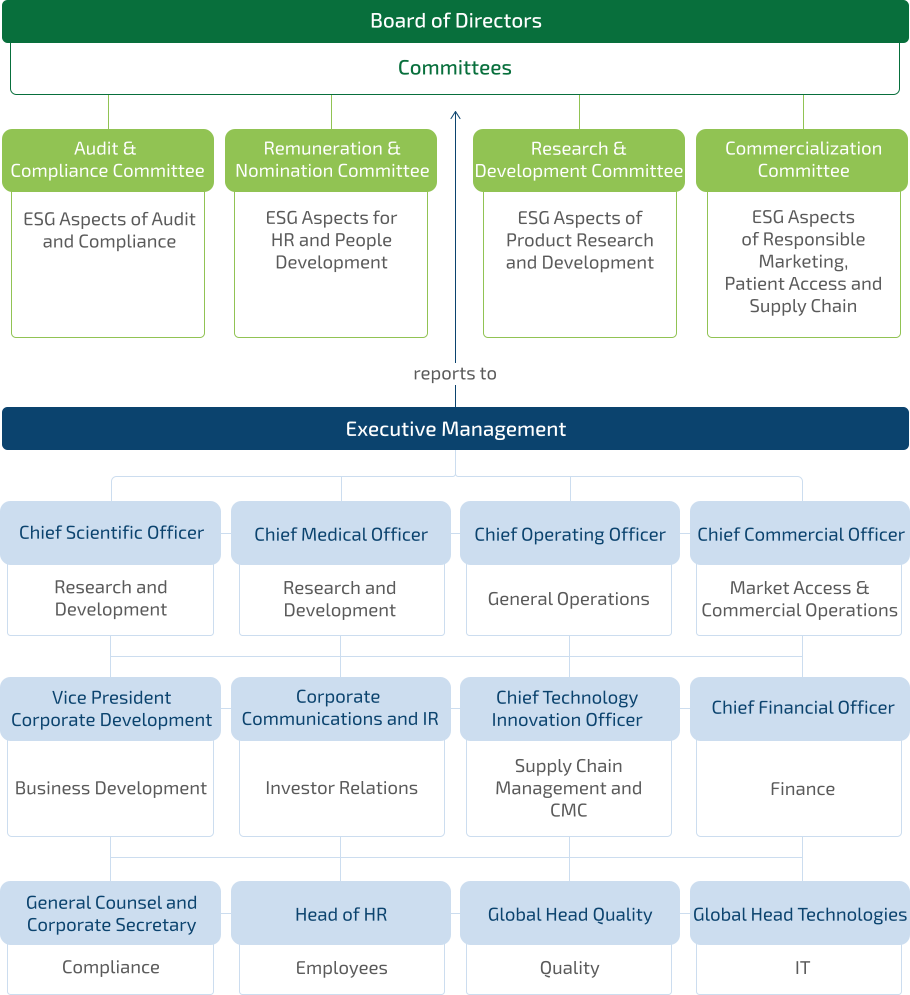
Pursuant to our Articles of Association, the Board of Directors has delegated day-to-day management to the Chief Executive Officer (CEO). The CEO leads a broader Executive Management Team, of which several members are also part of the Senior Management Team, which is responsible for day-to-day management of corporate strategy, including the integration of sustainability matters. Within the Executive Management Team, the General Counsel and Corporate Secretary has primary responsibility for management oversight of sustainability matters and guides the sustainability strategy. ESG considerations form a standing part of the Global Risk Management Committee’s remit and are regularly discussed as part of its ongoing agenda.
We strengthened governance and readiness for evolving sustainability requirements by evaluating our oversight framework and engaging specialist sustainability consultants to build internal capabilities. These efforts ensure informed decision-making on material impacts, risks, and opportunities, aligning governance with strategic objectives and regulatory expectations.
While not formally represented within the administrative, management, or supervisory bodies, employees’ perspectives are incorporated into decision-making through various channels, including regular meetings, feedback sessions, and committee participation.
In 2025, the Executive Management Team provided periodic updates to the Audit and Compliance Committee and the Board of Directors, with sustainability topics regularly included on meeting agendas. Key topics discussed in 2025 included regulatory compliance (including the Quick Fix amendment, and more generally the EU Omnibus Simplification Package), corporate culture, scientific innovation, and product affordability and pricing. Discussions addressed both direct and indirect matters related to material impacts, risks, and opportunities.
The Board of Directors and Audit and Compliance Committee bring significant industry and compliance expertise that supports oversight of ethical business practices. The Audit and Compliance Committee works closely with the Ethics and Compliance function, receiving quarterly updates on anti-bribery, anti-corruption, and related business-conduct topics to ensure emerging risks are effectively addressed.
For more information on our Board of Directors, see Section 3.2.4 “Non-Executive Directors”.
Integration of Sustainability-Related Performance Incentive Schemes (GOV-3)
In 2025, the short-term and long-term incentive compensation for the Board of Directors and Executive Management Team included performance metrics specifically tied to talent retention. For more information on incentive schemes related to talent management, see Section 3.4.3 “NEO Remuneration in FY25".
Due Diligence (GOV-4)
In 2025, we refined our sustainability due diligence processes to improve the identification, assessment, and management of ESG-related impacts, risks, and opportunities, in alignment with ESRS requirements. We refreshed our double materiality assessment (DMA) to ensure key topics were comprehensively covered and appropriately prioritized across our value chain. The process was documented, reviewed by the Global Risk Management Committee and validated by the Audit and Compliance Committee, ensuring governance oversight of both the process and its outcomes.
To improve the quality and consistency of data used in our assessments, we worked closely with internal data owners and functional leads across departments, while engaging with key suppliers and partners to strengthen visibility into upstream and downstream impacts. As part of our ongoing due diligence efforts, we continue to refine our internal control systems for sustainability reporting, integrating them more closely with our broader risk management and governance processes to ensure accuracy, accountability, and continuous improvement.
Core Elements of Due Diligence |
|
Related Paragraphs |
|---|---|---|
Embedding due diligence in governance, strategy and business model |
|
GOV-1, GOV-2, GOV-5 |
Engaging with affected stakeholders in all key steps of the due diligence process |
|
ESRS 2 SBM-2, S1-2 |
Identifying and assessing negative impacts on people and the environment |
|
IRO-1, S1-3, G1-2 |
Taking action to address negative impacts |
|
S1-4, S4-4, G1-1, G1-3 |
Tracking the effectiveness of actions |
|
S1-9, S1-14, S1-17, S4 (MDR-M), G1-3, G1-4, G1-6 |
Risk Management and Internal Controls Over Sustainability Reporting (GOV-5)
Our 2025 Sustainability Statement data collection process was designed to ensure compliance with ESRS requirements, and we established a governance and control framework to support the accuracy, consistency, and transparency of our reporting. We engaged our statutory auditor, EY Accountants B.V. (“EY”), to provide limited assurance as outlined in the independent assurance report.
The Chief Financial Officer (CFO) oversees sustainability reporting and auditing as part of our integrated reporting process. Day-to-day responsibility lies with the Finance Team, which coordinates data collection and validation across the business, supported by external advisors. Internal controls are embedded in key reporting activities, including data collection, consolidation, review, and approval.
We also engaged external advisors to identify, evaluate, and prioritize risks that could affect the quality and completeness of our reporting. This included a combination of top-down and bottom-up reviews, stakeholder interviews, and documentation analysis.
The following core risks were identified and are being mitigated as follows:
Risk |
|
Mitigation |
|---|---|---|
Regulatory and legal risks: Non-compliance with evolving CSRD and ESRS requirements. |
|
Continuous monitoring of regulatory changes, staff training, and engagement of external advisors. |
Data accuracy and integrity: Errors from manual inputs or inconsistent data sources. |
|
Implementation of validation checks, defined data ownership, and system-based controls. |
IT and systems risks: Failures or inefficiencies in reporting tools. |
|
Use of a secure, centralized reporting platform and regular system testing. |
Operational and organizational risks: Lack of clear responsibilities or resources. |
|
Defined roles, escalation procedures, and management oversight. |
Findings from risk assessments and internal reviews are integrated into broader risk management and reporting processes. External advisors work closely with Finance, Legal, IT, and Operations to ensure corrective actions are implemented. Controls are refined annually based on audit results, feedback, and lessons learned.
Stakeholder Engagement (SBM-2)
We engage with a broad range of stakeholders, including patients, healthcare providers, employees, suppliers, and (potential) investors, to understand and incorporate their perspectives into our strategy and business model. Stakeholder engagement is managed through business units and cross-functional teams focused on alliances, partnerships, healthcare professionals, patients, and other stakeholder groups, and is guided by our policy on bilateral contacts and dialogue with shareholders and stakeholders (the Bilateral Shareholders and Stakeholders Contacts Policy).
The Bilateral Shareholders and Stakeholders Contacts Policy sets out the principles and processes for engaging with (potential) shareholders and (potential) stakeholders, under which the Board of Directors may confirm the appropriate means for engagement with such (potential) shareholders and (potential) stakeholders. In addition, our Interactions with the Healthcare Community Global Policy outlines the principles and processes for interacting with members of the healthcare community, while our Interactions with the Patient Community Global Policy outlines guidelines for interacting with patient advocacy organizations and the patient community. While external stakeholders were not directly consulted for the double materiality assessment, their perspectives were represented through business units that maintain ongoing dialogue with them.
We have outlined below a non-exhaustive list of key elements of our engagement with stakeholders:
Stakeholder |
|
Engagement |
|
Purpose |
|
Outcomes |
|---|---|---|---|---|---|---|
Patients |
|
We host regular patient panels and listening sessions where patients share their experiences and challenges dealing with rare autoimmune conditions. |
|
Patient panels and listening sessions strengthen patient communities as well as deepen our own ability to identify and address unmet clinical needs. |
|
Patients
|
Healthcare Providers |
|
We engage with healthcare providers for clinical research, advisory services and speaking engagements. |
|
Engaging with healthcare providers helps us advance research, gain expert insights, and share medical knowledge. |
|
Healthcare Providers
|
Employees |
|
Our employee communications and engagement team connect with employees through engagement sessions, such as Culture Lab sessions, and periodic meetings, such as all hands and town hall meetings. |
|
Employee engagement sessions foster colleague unity, gather insights to enhance employee experience, and promote our Cultural Pillars. |
|
Employees
|
Suppliers |
|
Since 2024, our supply chain management team, in collaboration with an external vendor, has sent questionnaires to selected suppliers to gather emissions data. |
|
Supplier engagement informs our GHG inventory via emissions data gathered. |
|
Suppliers
|
Investors |
|
Our investor relations team regularly engages with shareholders on ESG matters. |
|
Our investor engagements provide us insights into key ESG topics and responsible business practices. |
|
Investors
|
Double Materiality Assessment (IRO-1, IRO-2)
Our Approach
Defining Scope and Objective of the Materiality Assessment
In 2025, we refreshed and revalidated our DMA in alignment with ESRS and CSRD. Building on the 2024 assessment, this process ensures continued compliance and relevance across all consolidated entities within our direct operations. OncoVerity, a joint venture in which we hold a 50% non-controlling interest, was included as part of the value chain, but remains unconsolidated.
The DMA refresh was designed to keep our assessment process robust, auditable, and responsive to evolving regulatory and business requirements. The approach centered on a comprehensive value chain mapping to identify the most relevant upstream, downstream, and company-operated activities, relationships, and sectors influencing our sustainability profile. Tier 1 suppliers and key customer segments were evaluated by geography, and topics were mapped and clustered in line with ESRS guidelines to ensure a tailored and compliant ESG topic list. Particular attention was given to high-risk activities and relationships, with geographic and sector-specific insights used to identify areas of heightened risk. This targeted focus strengthens the assessment of operations and partnerships and ensures continued alignment with CSRD requirements.
To learn more about our consolidation scope, see “Note 29 Overview of Consolidation Scope”.
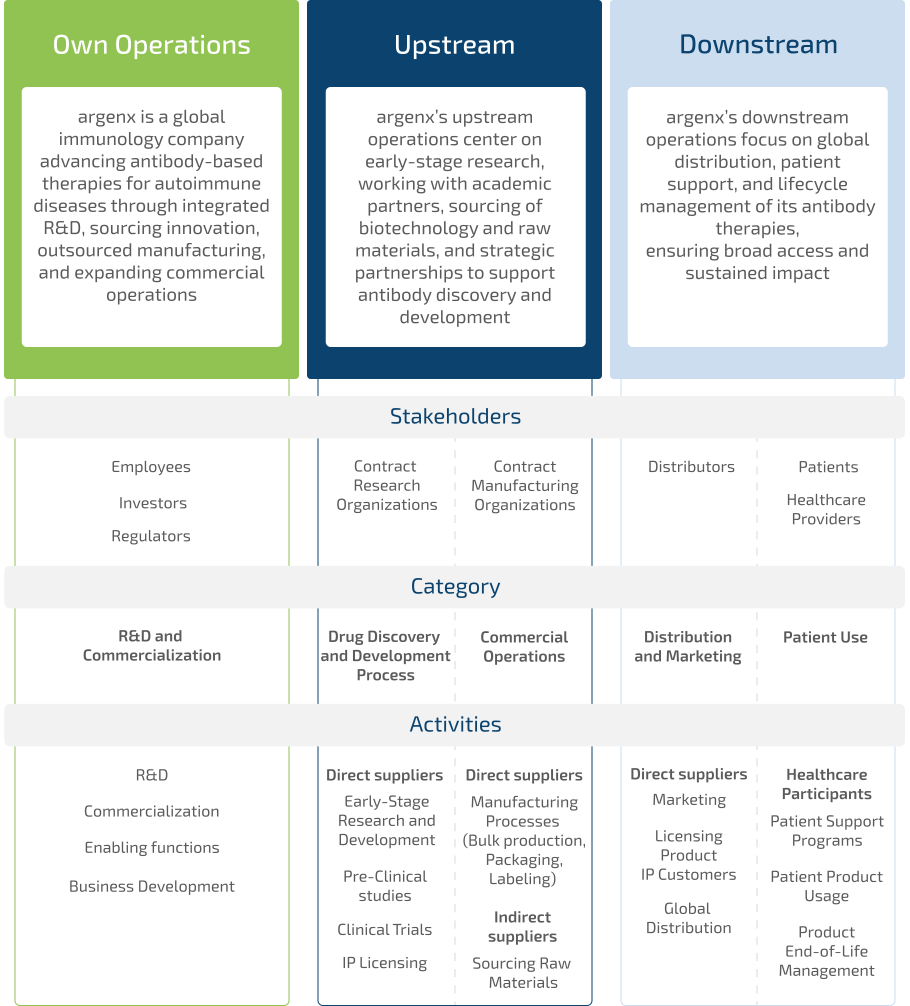
Identifying Topics and Impacts, Risks, and Opportunities:
The identification of impacts, risks, and opportunities (IROs) was guided by an updated assessment of the sustainability challenges and opportunities most relevant to our operations and business activities. Existing sustainability matters were reviewed and validated for completeness and accuracy, with updates made to IRO descriptions, time horizons and value chain attributions where necessary.
Stakeholders were consulted to validate the long list of IROs, ensuring that all relevant impacts, risks, and opportunities were captured and appropriately prioritized. IROs were grouped by topic, type, time horizon, geographical scope, and primary impact area, considering both our own operations and value chain activities. Dependencies on natural, human, and social/relationship capital were identified and validated. Potential impacts, risks and opportunities were systematically mapped to the dependencies from which they arise, ensuring each was directly linked to a defined impact. This process reinforces the connection between sustainability dependencies and potential business effects. Stakeholder engagement included direct consultation with internal experts and indirect consultation with credible proxies. Internal stakeholders represented a broad range of functions, while external perspectives were incorporated through desktop research and use of credible proxies.
Scoring and Thresholds
The 2024 scoring methodology was retained with minor refinements for consistency. Impact materiality was assessed by assigning scores to each IRO on a 1 to 5 scale across scale, scope, and irremediable character which were combined into a severity score. For negative impacts, this severity score was then multiplied by the likelihood of the impact occurring. Financial materiality of risks and opportunities was evaluated through considering likelihood and potential financial impact, aligned with our Enterprise Risk Management (ERM) framework. Each identified IRO was assessed across three time horizons; short term (0–2 years), medium term (3–5 years), or long term (more than 5 years).
Stakeholders were re-engaged during the scoring phase to challenge and validate the scoring of IROs, ensuring that prioritization reflected both internal expertise and external perspectives. Materiality thresholds for both sustainability impacts and financial effects were established using a matrix‑based approach grounded in the quantitative scoring results. These thresholds were reviewed, and stakeholder input was used to validate the inclusion of borderline topics. The process and scoring criteria were reviewed and approved by the Senior Management Team and the Board of Directors. Validation workshops provided qualitative feedback and ensured alignment between stakeholder perspectives and scoring outcomes.
Strategic Integration of Material IROs
Findings were validated by the Senior Management Team and the Board of Directors to ensure alignment with strategic objectives. Material IROs are integrated into our risk management and strategic planning processes, informing the Sustainability Statement and ongoing risk profile. Internal controls, validation workshops, and governance oversight ensure the integrity of the process. Methodologies, input parameters, and assumptions are regularly reviewed and updated to reflect evolving business, regulatory, and sustainability contexts.
Process Evolution
Compared with the prior year, the 2025 refresh included enhanced documentation, refined value chain mapping, adjustments to IRO time horizons, and strengthened stakeholder engagement. The scoring methodology and thresholds were reviewed and updated to reflect evolving business, regulatory, and sustainability contexts. These refinements improve audit readiness, reporting quality, and alignment with stakeholder priorities.
Double Materiality Assessment Result (SBM-3)
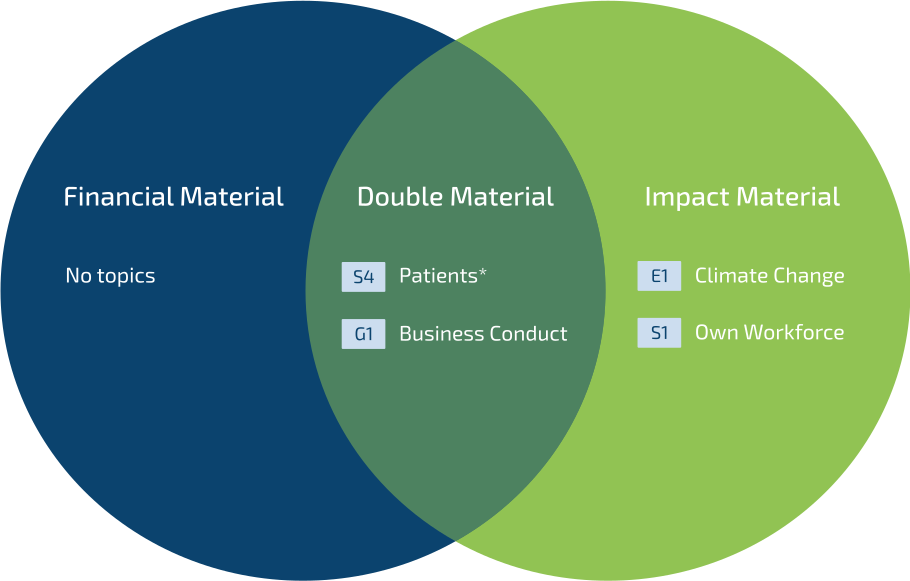
Through this double materiality re-assessment, which addressed both impact and financial materiality in accordance with the ESRS, we identified our material sustainability topics across ESRS categories for disclosure. New IROs were identified in 2025, and the IRO language was refined to improve relevance to our business model and operating environment. Waste-related IROs were removed from scope and deemed not to be material due to the low volume of waste generated in our business model. This conclusion was informed by waste audits completed as part of the 2024 reporting process. Equal treatment-related IROs (Training and Skills Development and Diversity), which were previously identified as positive impacts in 2024, have been reframed as potential negative impacts in 2025. Animal welfare was added as a new material risk under G1 for 2025. The materiality results are summarized in the following matrix, prepared in line with ESRS 2 SBM-3. For detailed descriptions of our material impacts, risks, and opportunities, see the relevant topical sections.
*For reporting purposes, we are disclosing information related to the Entity Specific Topic of Innovation under the S4 Patients section